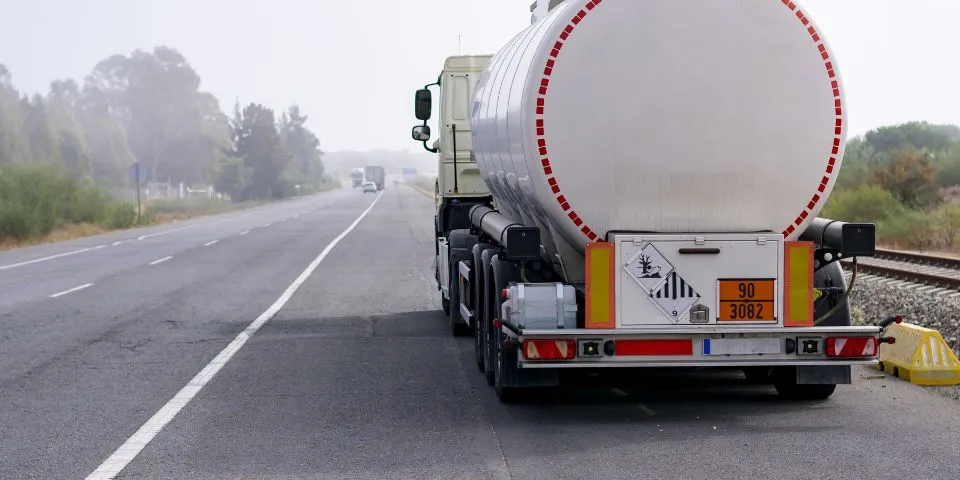
E-commerce of chemicals are growing rapidly, and so are the requirements for accurate information, safe handling and clear communication with customers. From 1 July 2026, new rules under the CLP Regulation will apply to the distance selling of hazardous chemicals. This means that all essential safety information must be displayed directly on the product page, not only provided in the Safety Data Sheet.
For both retailers and warehouse staff, these changes bring stricter requirements, greater responsibility and new routines covering everything from product information to storage and transport. In this article, we explain what the new rules regarding e-commerce of chemicals mean in practice, common pitfalls to avoid, and how to prepare your organisation in good time.
What Do the New Rules Mean for E-commerce of Chemicals?
The new provisions in the CLP Regulation aim to make e-commerce of chemicals clearer and safer for both consumers and professional users. In practice, this means that online retailers can no longer rely solely on referring customers to a Safety Data Sheet. All essential safety information must be made available directly on the product page, before the customer completes a purchase.
These requirements apply to all substances and mixtures classified as hazardous under CLP, regardless of whether the sale takes place via an online shop, marketplace, mobile app or any other digital sales channel.
Mandatory Information on the Product Page
From 1 July 2026, the following information must be clearly visible:
Product name
UFI code (Unique Formula Identifier)
Supplier’s name, address and telephone number
Hazard pictograms and signal word (where applicable)
Hazard and precautionary statements (H- and P-statements)
Quantity (package volume or weight)
The information should ideally be placed close to the price or purchase button, where the customer will actually see it. Also ensure that hazard pictograms are displayed in the correct format and proportions.
Why Are These Rules Being Introduced?
The purpose of the new legislation is to strengthen both consumer protection and workplace safety. By requiring clear information to be displayed directly on the product page, the risk of hazardous products being purchased “blindly” is reduced, while professional users are given better conditions for carrying out proper risk assessments.
The new rules are also intended to improve traceability in e-commerce of chemicals, through the use of UFI codes, thereby reducing handling errors and incidents in warehouse environments. These changes are a direct response to previous enforcement activities that revealed significant shortcomings in how chemicals are presented and sold online, particularly on third-party platforms, where control has often been limited.
In short, e-commerce of chemicals are set to become safer, with improved transparency and traceability across the supply chain.
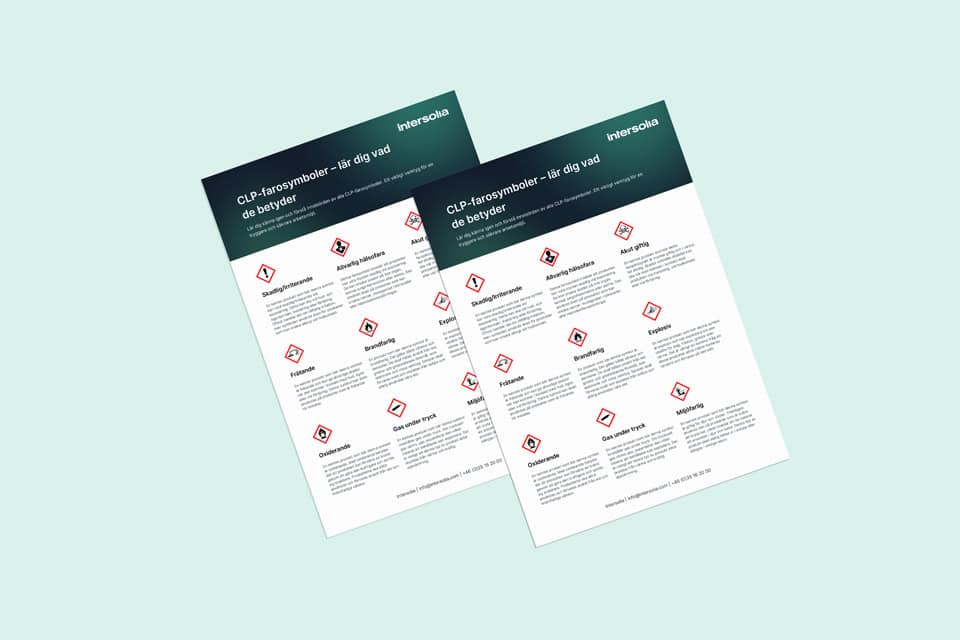
Lär dig förstå farosymbolerna
Vår kostnadsfria poster ger en tydlig översikt över alla symboler enligt CLP-förordningen – inklusive vad de betyder och vilka risker de varnar för.
Knowledge Requirements and Responsibilities for Warehouse Staff
In e-commerce of chemicals, companies are responsible not only for providing correct product information, but also for ensuring that chemicals are handled safely in the warehouse. Warehouse staff often come into direct contact with chemicals during picking, packing, storage and returns handling.
For this reason, UK legislation places clear requirements on competence, procedures and the working environment, primarily through the Health and Safety Executive (HSE) and regulations such as COSHH. Employers must ensure that warehouse operations are organised so that risks are understood, controlled and managed safely.
What Knowledge Must Staff Have?
Under UK legislation, particularly the Control of Substances Hazardous to Health (COSHH) Regulations, anyone who handles hazardous substances must receive adequate information, instruction and training to understand:
How chemicals can affect health and safety
(for example risks related to inhalation, skin contact or spills)How risks are identified
including common incidents such as leaks, damaged packaging or incompatible storageHow chemicals must be stored safely
with attention to ventilation, fire classification, signage, segregation of incompatible substances and minimising health risks at all timesWhich personal protective equipment (PPE) is required
such as gloves, safety goggles, aprons, and the availability of emergency equipment like eyewash stationsWhich procedures apply in the event of accidents or spills
including reporting, containment and clean-up procedures
These knowledge requirements are a fundamental part of ensuring safe chemical handling in warehouse and logistics environments.

The Employer’s Responsibilities
The employer must ensure that:
All staff receive proper induction and training before they begin handling chemicals
Risk assessments are up to date and readily available to relevant personnel
Clear written procedures are in place for storage, picking, packing and spill management
Personal protective equipment (PPE), absorbent materials and labelling are easily accessible
Refresher training is provided when needed, for example when processes, products or legislation change
If the organisation handles CMR substances, carcinogenic, mutagenic or reprotoxic substances, the requirements become more stringent under UK legislation, primarily through COSHH and related HSE guidance. In such cases, employers must apply stricter controls, enhanced risk assessments and additional training to minimise exposure as far as reasonably practicable.
Regulations to Be Aware Of
COSHH – Control of Substances Hazardous to Health Regulations 2002
Regulates the identification, assessment and control of risks from hazardous substances in the workplace.COSHH (Carcinogens, Mutagens and Reprotoxic Substances)
Imposes stricter requirements for substances that are carcinogenic, mutagenic or toxic to reproduction, including enhanced risk assessments and exposure controls.Personal Protective Equipment at Work Regulations 1992 (as amended 2022)
Sets requirements for the selection, use, maintenance and training related to personal protective equipment and work equipment.Dangerous Substances and Explosive Atmospheres Regulations (DSEAR) 2002
Covers the safe handling and storage of flammable liquids and substances that may create explosive atmospheres.Environmental Protection Act 1990
Establishes responsibility for preventing environmental damage and protecting human health in cases of improper storage, handling or disposal of chemicals.
Transport Preparation and Dangerous Goods
In e-commerce of chemicals, many steps must be carried out correctly, and transport is one of them. When chemicals are shipped from a warehouse to a customer, it is not sufficient to comply with CLP requirements alone. Many products are also subject to dangerous goods transport regulations.
This applies regardless of whether the delivery is made by courier, parcel distribution or as larger consignments. To determine whether a product is classified as dangerous goods, you should always check Section 14 (Transport information) of the Safety Data Sheet. This section states whether the product has a UN number and whether it belongs to one of the dangerous goods classes.

A common example is perfume products, which many people do not consider hazardous. These are often classified as UN 1266 PERFUMERY PRODUCTS, meaning they are considered flammable liquids and may not be shipped as ordinary goods. Such consignments must be prepared by personnel with the appropriate dangerous goods training.
This means that the packaging must be approved for the substance, labelled with the correct dangerous goods labels, and in some cases accompanied by a dangerous goods declaration. In addition, transport must be carried out by a carrier authorised to handle the relevant type of dangerous goods.
Incorrectly shipped products, so-called “hidden dangerous goods”, do not only pose a serious safety risk, but also constitute a breach of dangerous goods transport legislation. This can result in penalty charges, delays, stopped shipments and, in the worst case, legal consequences.
A structured approach helps ensure that your e-commerce of chemicals meets regulatory requirements while maintaining high safety standards.
Do You Need Help With Dangerous Goods?
If you are unsure how your products should be classified or shipped, it is important to seek expert support. Together with our partner Chemwise, we have certified advisers with many years of experience who can support your organisation. We are happy to assist with guidance, classification and training.
Do you have any questions? We are here!
Our EHS consultants have extensive experience in environmental and chemical management work and are here to help you improve safety and ensure legal compliance. We also offer training in environmental and workplace legislation, REACH, chemical management and risk assessment.
Do you have any questions? Don’t hesitate to contact us by clicking the button below or emailing us directly at consulting@intersolia.com.