What are GHS?
The Globally Harmonized System of Classification and Labelling of Chemicals (GHS) is an internationally agreed framework for classifying and communicating the hazards of chemical substances and mixtures. Its main purpose is to ensure that consistent and clear information about chemical hazards is available worldwide, helping to protect human health, safety, and the environment during the manufacturing, handling, transport, use, and disposal of chemicals. The system was developed under the United Nations and first published in 2003, with regular updates to reflect scientific and technical progress.
Before the GHS, different countries and regions used their own systems to classify hazardous chemicals, which meant that the same substance might be treated very differently in different places. This inconsistency led to confusion, increased compliance costs for international trade, and gaps in health and safety protection. The GHS was designed to address these issues by providing uniform criteria for hazard classification and standardized elements for hazard communication.
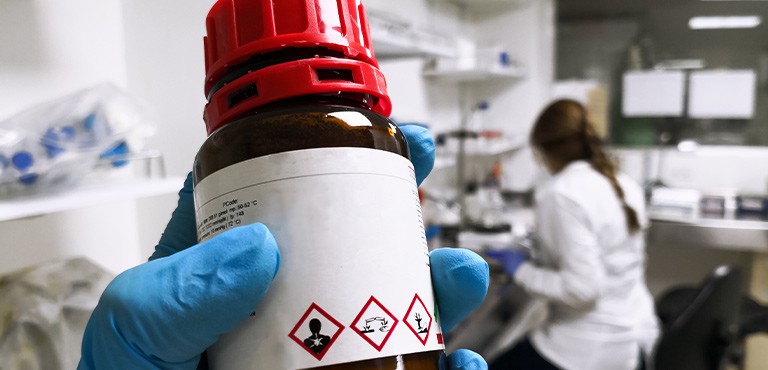
At its core, the GHS defines how a chemical’s hazards – including health, physical, and environmental risks – should be determined and documented. It also sets out harmonised communication tools such as hazard pictograms, signal words (like “Danger” or “Warning”), hazard statements (brief descriptions of the hazard), and precautionary statements (recommended protective measures). These tools appear on chemical labels and Safety Data Sheets (SDS), which are reference documents used by employers, workers, emergency responders, and downstream users.
One of the most important parts of GHS is the standardised hazard classification criteria. These criteria help ensure that chemicals are categorized consistently across countries – for example, defining what makes a substance flammable, corrosive, toxic, or harmful to the aquatic environment. Once a hazard class is assigned, the GHS dictates how that hazard should be communicated on labels and SDS documents so that users understand the risks and how to manage them safely.
GHS in Europe
In Europe, the GHS has been implemented through the CLP Regulation (Regulation (EC) No 1272/2008), which stands for Classification, Labelling and Packaging of substances and mixtures. This regulation aligns the EU’s chemical classification and labelling system with the United Nations’ GHS, ensuring that hazardous chemicals are consistently identified and communicated throughout the European market.
Under CLP, manufacturers, importers, and distributors must classify and label chemicals according to GHS criteria before placing them on the European market. Labels include pictograms, signal words, hazard statements, precautionary statements, and supplier information. The CLP Regulation replaced older EU directives on hazardous substance labelling and has been the legal standard since it entered into force in 2009, with full application in all member states by 2015.
In recent years, the EU has updated the CLP Regulation to include new hazard classes and criteria in line with evolving scientific knowledge and policy goals, strengthening protection for human health and the environment.
Overall, the GHS provides a common global language for chemical hazard communication, making it easier for countries, industries, and workers to understand and manage chemical risks, while also supporting international trade and regulatory cooperation.
Learn more:

Do you have any questions? We are here!
Our EHS consultants offer expert guidance in all aspects of chemical management – from risk assessment and substitution to compliance with REACH and other regulations. We also provide training to strengthen your knowledge in safety, legislation, and chemical handling.
Do you have any questions? Don’t hesitate to contact us by clicking the button below or emailing us directly at consulting@intersolia.com.