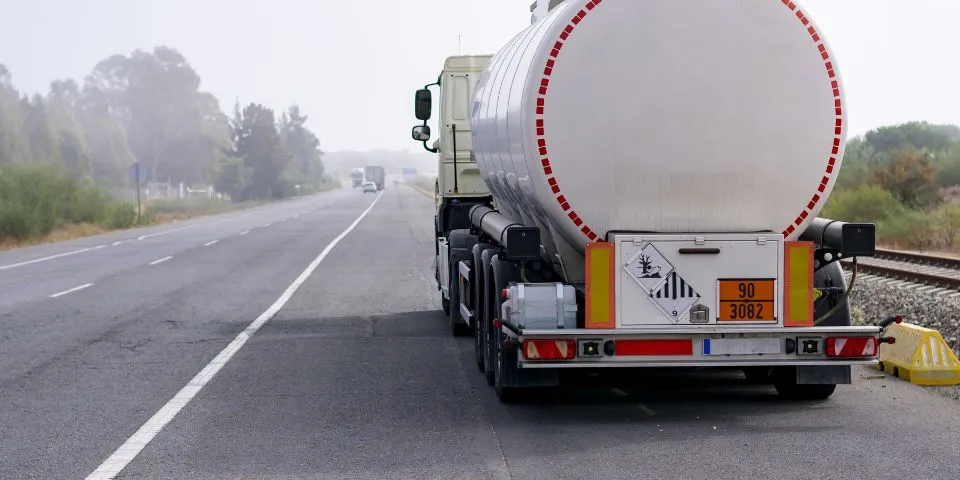
When discussing chemical risk sources in the workplace, it’s easy to focus on labelled chemicals with warning symbols and Safety Data Sheets. But chemical-related occupational risks extend far beyond the products we associate with hazard pictograms. Dust, exhaust fumes, hot work and processes that alter the properties of substances can pose equally significant risks — and these are often much harder to identify.
In this article, we explain what hidden chemical risk sources are and provide practical guidance on how to identify and manage these hidden chemical risks in your workplace.
What Are Hidden Chemical Risk Sources?
Identifying a chemical product is simple. It comes with hazard symbols, warning text and an accompanying Safety Data Sheet — where you can also find information about the risks associated with the product and its use. What is more difficult to identify are what we refer to as hidden chemical risk sources.
The definition of a chemical risk source is:
A chemical substance, or several chemical substances together, that may lead to ill health or accidents due to:
their hazardous properties,
risks created by the handling itself – such as dust or exhaust fumes,
their temperature – hot work or cold work,
processes that may reduce or displace oxygen levels in the air,
an increased risk of fire or explosion.

Webbinarier
I detta webbinarium lyfter vi de ofta förbisedda övriga kemiska riskkällorna vid riskbedömning.
Tips for Identifying Hidden Chemical Risk Sources
There are several ways to work with hidden chemical risk sources. One helpful approach is to group them into different categories to quickly gain an overview of the potential consequences associated with each type of risk. Below are some suggested ways to categorise these risk sources:
Products that Become More Hazardous Through Handling
Products that become more hazardous through handling are often not dangerous in themselves, but may pose significant risks during use. It is therefore important to assess the handling of even seemingly harmless substances.
Prolonged or repeated skin contact – even mild substances such as water can cause dry and irritated skin.
Handling hot liquids – may cause burns.
Handling hot vapours – can also lead to severe burn injuries.
Handling liquid nitrogen – may cause serious cold burns.
Inhalation of dust – even dust without hazardous substances can harm the body. The smaller the particles, the deeper they can penetrate into the respiratory system — and the more damage they may cause.
High concentrations of fine dust in the air – may also increase the risk of explosion.

Processes That May Release Hazardous Chemical Substances
During various processes, hazardous chemical substances may be released. It is therefore essential to remember that different applications can lead to different outcomes and must be assessed through separate risk assessments.
Welding fumes – can in many cases be carcinogenic.
Exhaust emissions – e.g. diesel exhaust contains both particles and gases that can cause inflammatory changes in the lungs and, over time, lung cancer.
Fumes released during soldering – these may contain flux residues, solder particles, gases and vapours generated during heating and bonding, all of which can cause harm if inhaled.
Heating PUR materials (polyurethane) – can release diisocyanates, which are highly allergenic.
Oil mist – can form during many industrial processes, such as lubricating, cooling or cutting metal, and may contain a range of harmful chemicals and particles, for example heavy metals, carbon monoxide and nitrogen oxides.
Carbon monoxide and hydrogen sulphide – both gases can displace oxygen and cause asphyxiation.
Hydrogen sulphide from biological processes – may form in wells, sludge or during processes in pulp and paper mills.
Processes that consume oxygen as other substances oxidise – for example during decomposition or in biofuel plants, which may result in oxygen-deficient atmospheres.
Processes That May Alter the Original Properties of a Product
- A used oil – may be carcinogenic, is often allergenic, and can be readily absorbed through the skin.
- A cutting fluid during use – may cause eye and respiratory irritation.
Materials That May Contain Hazardous Substances
Today, many materials are treated to prevent bacterial growth, eliminate odour, improve weather resistance or reduce flammability. When coming into direct contact with such materials, it is important to determine which substances they have been treated with in order to take the appropriate protective measures.
Impregnated wood
Building materials containing asbestos

In this article, we walk you through how to do a risk assessment of chemical products and what is important to consider during the process.
Recommended Workflow
Assemble a team with expertise in the relevant legislation, along with one or more individuals who are well acquainted with the practical work.
- Identify and list the hidden chemical risk sources – and, if helpful, categorise them:
Products that become more hazardous through handling
Processes that may release hazardous chemical substances
Processes that may alter the original properties of a product
Materials that may contain hazardous substances
- Gather supporting documentation for the risk assessment. There is extensive guidance available online, and any measurements that have been carried out should also be included in the assessment.
- Carry out the risk assessment as usual and prepare safety sheets to ensure safe handling.
- Finally, remember to inform your employees! It is essential that everyone working with or near these processes is fully aware of the risks that hidden chemical risk sources may pose.
Do you have any questions? We are here!
Our EHS consultants have extensive experience in hidden chemical risk sources and substitution work and are here to help you enhance safety and comply with legal requirements. We also offer training in environmental and workplace legislation, REACH, chemical management, and risk assessment.
Do you have any questions? Don’t hesitate to contact us by clicking the button below or emailing us directly at consulting@intersolia.com.