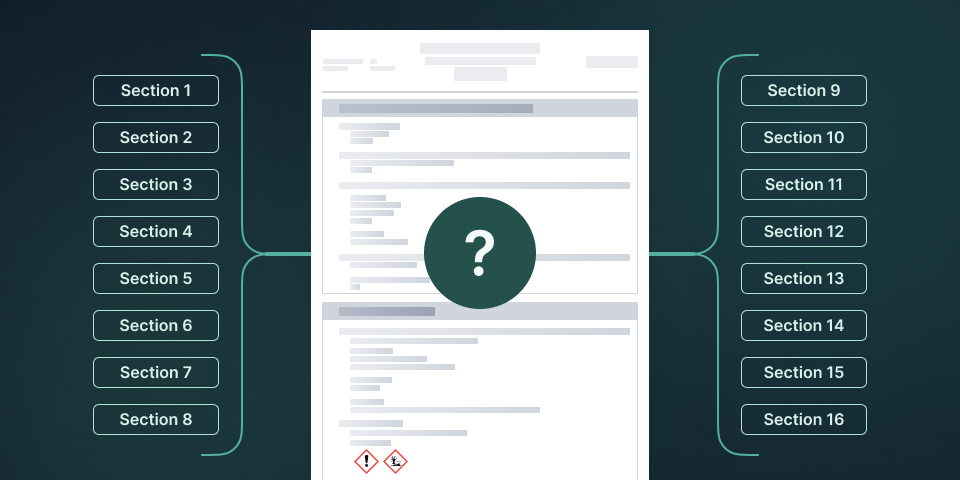
What information does a Safety Data Sheet (SDS) contain? There are strict guidelines and legal requirements that every SDS must meet in order to be both useful and compliant. These guidelines are designed to ensure that all potential hazards are clearly identified and that users know how to handle the product safely.
In this article, we walk through the different sections that an SDS must include under the REACH Regulation (1907/2006). We highlight why each section is important and what information must be provided. By understanding these requirements, you, as a supplier, importer or user of chemical products,can ensure compliance and contribute to safer chemical management.
What Should a Safety Data Sheet Contain?
A Safety Data Sheet (SDS) consists of sixteen sections, each with specific requirements under the REACH Regulation (1907/2006). These requirements must be met for the SDS to be both useful and legally compliant. By carefully following these guidelines, companies can ensure that their SDSs meet regulatory obligations and support the safe handling of chemical products.
Below is an overview of the different sections and what they must contain.
Section 1: Identification of the Substance or Mixture and of the Company
In this section, you must specify the product name and its intended use. The supplier’s contact details and an emergency telephone number must also be provided. It is important that the product is used correctly and in accordance with its intended purpose.
Section 2: Hazards Identification
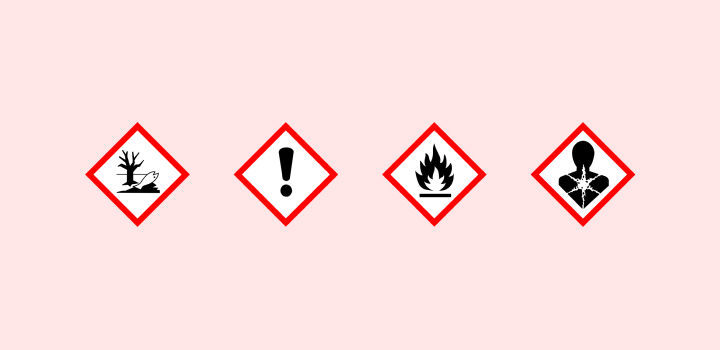
In this section, the product’s classification and labelling must be described, including hazard statements and precautionary statements. Any additional hazards not covered by the classification, such as dust explosion risk or oxygen deficiency from gas release, should also be mentioned.
Section 3: Composition/Information on Ingredients
Section 3 of a Safety Data Sheet (SDS) lists all hazardous ingredients, along with their concentrations.
Section 4: First-Aid Measures
This section describes the immediate actions to take in the event of an accident, as well as the symptoms and effects that may occur after exposure. This is critical information to review before using the product, ensuring that the correct care and measures can be taken if an incident occurs.
Section 5: Firefighting Measures
This section in the safety data sheet specifies which extinguishing media are suitable or unsuitable in the event of a fire, as well as any hazardous decomposition products that may form. Having accurate information is essential, as using the wrong extinguishing method can worsen the situation.
Section 6: Accidental Release Measures
This section describes the necessary measures and protective equipment required to manage spills and releases. It is important to have the correct equipment available, such as absorbents or secondary containment materials.
Section 7: Handling and Storage
This section provides recommendations for the safe handling and storage of the product, including information on substances it must not be stored with and appropriate storage conditions.
Section 8: Exposure Controls/Personal Protection
Section eight in a safety data sheet (SDS) outlines the protective measures and personal protective equipment (PPE) required to minimise exposure. This may include local exhaust ventilation, protective gloves, respiratory protection and more. It is important to ensure that the workplace’s protective measures align with the information provided in the SDS.

Section 9: Physical and Chemical Properties
This section contains information about the product’s physical and chemical properties, such as appearance, odour, pH value and boiling point.
Section 10: Stability and Reactivity
This section in an SDS specifies any hazardous chemical reactions that may occur when the product is heated or mixed with other substances.
Section 11: Toxicological Information
Section 11 in a safety data sheet describes the product’s health hazards and associated symptoms, broken down by route of exposure. It also indicates whether the effects are immediate, delayed, chronic or temporary.
Section 12: Ecological Information
This section describes the product’s environmental impact, including biodegradability, bioaccumulation potential and ecotoxicity in soil, air or water.
Section 13: Disposal Considerations
This section in the SDS provides information on how the product and its packaging should be managed as waste, including any applicable waste codes.
Section 14: Transport Information
This section provides information on the product’s transport requirements and vehicle marking, aimed at those responsible for transporting the substance.

Section 15: Regulatory Information
This section contains information on relevant EU regulations and national legislation applicable to the product.
Section 16: Other Information
Finally, section 16 in a safety data sheet provides additional information, abbreviations and the full wording of hazard statements for all listed ingredients. It also includes details of any changes made in the most recently updated version of the Safety Data Sheet.
Do you have any questions? We are here!
Our EHS consultants have extensive experience in safety data sheets and are here to help you enhance safety and comply with legal requirements. We also offer training in environmental and workplace legislation, REACH, chemical management, and risk assessment.
Do you have any questions? Don’t hesitate to contact us by clicking the button below or emailing us directly at consulting@intersolia.com.