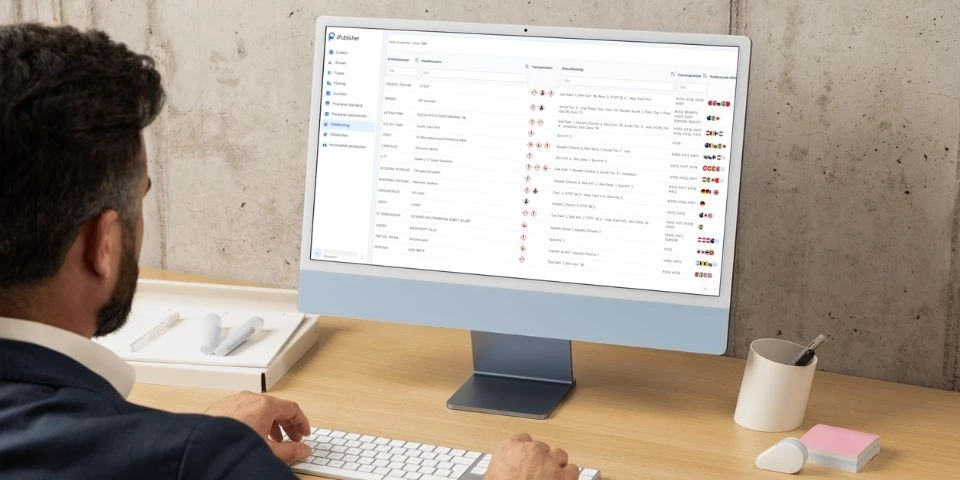
Working with safety data sheets (SDS) has become increasingly complex. New markets, multiple languages and evolving regulatory requirements mean that processes which once worked manually are no longer sustainable.
For many organisations, the challenge is no longer simply creating an SDS – it’s ensuring that it is accurate, up to date and available in the right version, in the right language, at the right time.
At the same time, regulations such as the REACH Regulation and the CLP Regulation place clear demands on content, updates and distribution.
Here are seven clear signs that it may be time to digitalise your SDS management.
7 signs your safety data sheet management needs to be digitalised
1. You update SDS manually
If updates are handled by manually editing documents, copying content or managing files locally, this creates a clear risk. The process is time-consuming, and errors can easily find their way into the safety data sheet. It also becomes difficult to scale as your organisation grows.
By digitalising your processes, you can easily reuse information across documents and ensure that any changes you make are applied consistently.
2. You lack control over versions
Do you have multiple versions of the same SDS in circulation? You’re not alone.
Common consequences include:
- Uncertainty about which version is current
- The risk of sending the wrong version to customers
- Challenges during audits
With a system, you can track change history, so you always know what changes have been made and which version is the most recent.
3. You manage multiple languages or markets without a clear structure
Handling SDS across several countries involves more than translation. It requires you to:
- Comply with local requirements
- Use correct terminology
- Keep all language versions aligned
Without a structured approach, this quickly becomes both time-consuming and high-risk.
iPublisher is designed to support multiple languages and markets within the same workflow. Content can be reused and adapted per market, reducing inconsistencies and manual effort.

4. You are unsure whether your SDS meet regulatory requirements
Regulations evolve continuously, making it difficult to ensure that all SDS remain compliant at all times.
This can lead to:
- Compliance gaps
- Increased risk during inspections
- Time-consuming manual checks
A digital system like iPublisher supports structures and content in line with current regulations, making it easier to work consistently and correctly from the start.

5. Creating new Safety Data Sheets takes too long
When launching new products or entering new markets, SDS creation often becomes a bottleneck:
- Information needs to be gathered
- Documents are built from scratch
- Valuable time is lost
By reusing structured data and working within predefined templates, new SDS can be created significantly faster, without compromising quality.
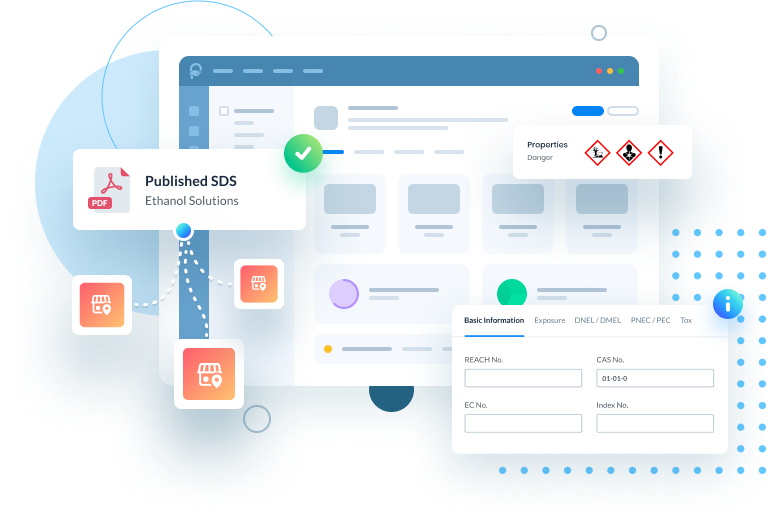
iPublisher
Fast and easy SDS authoring
iPublisher is our comprehensive SDS authoring system where you can create, publish and distribute safety data sheets. The system gives you full control and complete regulatory compliance.
6. You struggle to distribute the right SDS to the right recipient
Ensuring that the correct SDS reaches the right customer in the right language is more complex than it may seem.
Common challenges:
- Manual distribution
- Limited traceability
- Difficulty proving compliance
With iPublisher, SDS can be distributed directly from the system, ensuring the correct version reaches the right recipient – with full traceability.
7. Knowledge is limited to a few individuals
If SDS management relies on specific individuals, your organisation becomes vulnerable:
- Risk during absence or staff turnover
- Difficulty standardising processes
- Long onboarding times
By centralising data and processes, iPublisher reduces dependency on individuals and makes SDS management easier to scale across the organisation.

What does this mean in practice?
If you recognise several of these signs, the issue is not just inefficiency – it represents real risks:
- Incorrect or outdated information
- Non-compliance with regulations
- Time-consuming and resource-heavy processes
At the same time, it highlights an opportunity to work more proactively, efficiently and with greater control.
Simplify your safety data sheet management
By digitalising your SDS processes, you can:
- Create a centralised structure
- Automate updates
- Manage multiple languages and markets efficiently
- Ensure information is always accurate and up to date
With a digital solution like iPublisher, you can create, update and distribute safety data sheets within a single platform – giving you the control needed in an increasingly complex regulatory landscape.
iPublisher
Ready to take control of your safety data sheets?
Book a demo and discover how iPublisher can help you streamline your processes, reduce risks and ensure compliance – across all your markets.