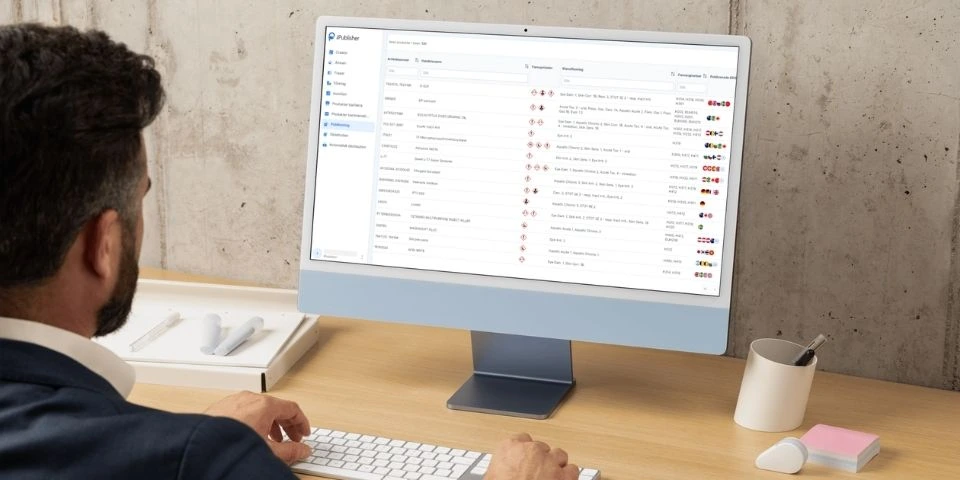
Safe and effective chemical management takes more than an up-to-date chemical inventory. Chemical risks need to be identified and assessed, hazardous products replaced where possible, and essential safety information made available to the right people. But how do you create an approach that works in practice and can be sustained over time?
Clear responsibilities, well-defined routines and the right tools make it easier to manage chemicals systematically. In this article, we explore five steps to help you create structure, set the right priorities and gain better control over chemical management in your day-to-day work.
Article summary
Systematic chemical management starts with clear responsibilities, an up-to-date chemical inventory and regular risk assessments. By identifying sources of chemical risk, prioritising risks and exploring substitution opportunities, organisations can reduce risks to both people and the environment.
To make chemical management effective over time, employees need easy access to safety information, and implemented measures need to be followed up. Clear routines and digital tools such as iChemistry make it easier to create structure, ensure regulatory compliance and gain better control over chemical management.

Why structure matters in chemical management
Chemical management is an important part of systematic health and safety management. Employers are responsible for preventing ill health and accidents and ensuring that sources of chemical risk are managed safely.
At the same time, chemical management can be demanding. New products are introduced, safety data sheets are updated, and operational changes can affect existing. Without clear routines, information can become outdated, tasks can be overlooked and important measures may not be followed up.
A systematic approach helps you maintain continuity and keep your chemical management effective, even when the organisation changes.
In practice, this means taking a few key steps:
- Make it clear who is responsible for each task.
- Keep track of the sources of chemical risk in your operations.
- Identify and assess risks before work begins.
- Explore ways to reduce risks through substitution and other measures.
- Make sure the right employees receive the information they need and follow up regularly.
Under COSHH (Control of Substances Hazardous to Health Regulations 2002), employers must protect employees from chemical health risks and make sure they have the information, instructions and training they need to work safely.

5 steps to bring structure to chemical management
1. Set up a clear structure and assign responsibilities
Effective chemical management starts with a clear structure. It should be easy to see where chemicals are used and stored, who is responsible for each task and how information should be managed.
Start by looking at how your organisation is structured. Do you have several departments, production areas or sites that handle chemicals in different ways? If so, it may make sense to organise your chemical inventory around them.
Your structure should be detailed enough to provide a clear overview without becoming difficult to manage.
It is just as important to be clear about who is responsible for what. Who carries out chemical inventories? Who is responsible for risk assessments and substitution? Who makes sure the agreed measures are carried out?
When responsibilities are clear, tasks are less likely to be overlooked or to depend on individual employees.
How iChemistry can help
In iChemistry, you can set up a department structure that reflects your operations, assign responsibility for each department and set user permissions based on roles and responsibilities.
2. Take stock of your chemicals and identify other sources of chemical risk
An up-to-date chemical inventory list is the foundation of systematic chemical management. Once you know where chemical risks can arise, it’s easier to identify and assess them and decide where to act first.
Your inventory should cover all relevant chemical products used or stored across your operations.
Remember to look beyond chemical products. Welding fumes, dust and diesel exhaust can also pose chemical risks in the workplace. Identify these hidden chemical risk sources and include them in your risk assessments, whether or not a safety data sheet is available.
Once your inventory is complete, the information needs to be kept up to date. Register new products, remove products that are no longer in use from your active inventory and ensure that safety data sheets are current.
It is also worth checking whether you use several products for the same purpose. Do you need five different cleaning products for similar tasks, or could you use fewer? Reducing the number of products can mean fewer risk assessments, simpler administration and better opportunities for substitution.
How iChemistry can help
A digital chemical inventory gives you a clear overview of all the chemical products used across your organisation. iChemistry also gives you access to up-to-date safety data sheets and lets you record other sources of chemical risk that need to be assessed.

3. Prioritise risk assessments where they matter most
Sources of chemical risk must be assessed before work begins. Each risk assessment must reflect the actual conditions in which the product or source of risk is present, including quantities, exposure duration, working methods and existing protective measures.
If your organisation uses a large number of chemical products, there may be a lot to assess. Prioritise any outstanding assessments and complete the required risk assessment before starting any new task.
One way to prioritise is to focus first on tasks where the risks are considered particularly high. This could include handling large quantities of chemicals, processes where incidents have previously occurred, or products with particularly hazardous properties.
Products containing carcinogenic, mutagenic or reprotoxic (CMR) substances may also require particular attention, as they are subject to specific requirements.
Start by reducing risk at source
Once risks have been identified, protective measures need to be selected. The order in which these measures are considered matters. It may be tempting to focus immediately on personal protective equipment (PPE). However, the principles of risk reduction prioritise measures that eliminate or reduce risks at the source.
First, explore whether the need for a hazardous product can be eliminated or whether it can be replaced with a less hazardous alternative. If this is not possible, closed systems, changes to working methods or process ventilation may help reduce exposure.
Personal protective equipment is used when other measures cannot provide sufficient protection.
An effective risk assessment should do more than identify hazards. It should result in clear instructions and practical measures that make work safer.
How iChemistry can help
iChemistry helps you prioritise products based on their hazardous properties, document risk assessments and follow up on agreed measures. You can also use completed risk assessments to create safety sheets with information on safe handling.

Expertens perspektiv
”AI kan vara ett bra stöd i arbetet med riskbedömningar, framför allt när det gäller att bearbeta och strukturera information. Men för att bedöma den faktiska risken behöver vi också förstå hur kemikalien används i verksamheten. Den kunskapen finns på arbetsplatsen och behöver alltid vara en del av bedömningen.”Jenny ElfvingKemikalieexpert, Intersolia
4. Explore ways to replace hazardous chemicals
Substitution means replacing a hazardous chemical product with a less hazardous alternative or changing a working method to reduce or eliminate the need for the product.
It is an important part of preventing chemical risks and offers several potential benefits. In addition to reducing risks to people and the environment, it can simplify chemical management by reducing the need for specific control measures and some administrative requirements.
However, finding a better alternative is not always straightforward. A replacement product must meet your operational and technical requirements while posing a lower risk. Comparing hazard classifications alone is therefore not enough. Conditions of use, exposure and environmental impact must also be considered.
It is equally important to avoid replacing a hazardous product with another that introduces similar or new risks.
Document your findings even when substitution is not possible
Sometimes there is no suitable alternative on the market. If that is the case, record which alternatives you considered, why they were unsuitable and when the decision should be reviewed.
For certain particularly hazardous substances, there is also a specific requirement to investigate substitution options.
Keeping a record of both the substitutions you make and the options you explore helps you show how your organisation is reducing chemical risks over time.
How iChemistry can help
In iChemistry, you can identify products to prioritise for substitution, compare alternatives and document the results of your evaluations. This makes it easier to review previous decisions and reduce your use of hazardous chemicals over time.
5. Keep employees informed and follow up regularly
A risk assessment helps make the workplace safer when the people handling the chemicals get the information they need to act on it.
Employees should be able to find out what the risks are, how to handle a product safely, which control measures they need to use and what to do if an accident occurs. Accessible safety data sheets, safety sheets and clear working instructions all play an important role.
Make the information easy to find where the work takes place. For example, QR codes can give employees direct access to relevant safety data sheets and safety sheets on their phones.
For higher-risk tasks, you may also need to train or brief employees to ensure that instructions are understood and followed.
Open Access
Sharing safety information made easy
Create QR codes for different departments in iChemistry and share them online or print them out. Employees can scan a code with their phone camera to access important information straight away, without signing in.
Make regular follow-ups part of your routine
Chemical management is an ongoing process. Working conditions change, new products are introduced and existing risk assessments may need updating.
Put procedures in place to check regularly that:
Your chemical inventory is up to date.
Risk assessments have been completed and remain relevant.
Agreed protective measures have been put in place.
Substitution options have been explored and followed up.
Changes in legislation, products or working methods have been taken into account.
A scheduled annual review can complement your regular follow-ups. However, risk assessments also need to be reviewed whenever changes occur that could affect the risks, rather than waiting for a scheduled review date.
How iChemistry can help
QR codes and digital safety sheets give employees access to safety information where they need it. The overview in iChemistry also helps you spot missing risk assessments, upcoming reviews and actions that need follow-up.
Common mistakes that complicate chemical management
Even with clear procedures, a few common problems can create extra work.
One example is buying new chemical products without reviewing them first. This can introduce products with hazardous properties or specific legal requirements that you could have avoided.
An approval procedure for new chemical products lets you check whether a product is suitable and whether a less hazardous alternative is available before you buy it.
Another challenge arises when chemical management depends on one or a handful of dedicated employees. If those individuals leave or change roles, valuable knowledge and established ways of working may be lost.
That is why responsibilities, routines and documentation need to be integrated into everyday business processes.
Risk assessments and substitution assessments should be more than just paperwork. To make a real difference, the results need to lead to practical actions, clear instructions and regular follow-ups.
Put structure into practice
You can build a clearer structure for chemical management without changing all your procedures and working methods at once.
- Start by reviewing how you manage chemicals today. Are responsibilities clear? Is your chemical inventory up to date? Do you know which risk assessments need to be completed or reviewed?
- Identify where improvements are most needed and make a plan for how to adress them.
The most important thing is to establish a way of working that remains effective over time, without relying on individual employees.
Clear procedures, the right expertise and digital tools make it easier to keep the work on track, follow up and spend more time on measures that reduce risks.
Need support with your chemical management?
At Intersolia, we help organisations manage chemicals more safely and efficiently. Our chemical management software, iChemistry, and our EHS experts can support you at every stage, from building your inventory and assessing risks to substitution, training and follow-up.
Whether you want to improve your existing procedures or need help in a specific area, we can help you find an approach that suits your organisation.
Explore iChemistry or get in touch to discuss how we can help you improve your chemical management.